FireUG AI Breakthrough Night: When Microsoft Experts Meet Developers Over Coffee
Why This Evening Was Worth Writing About
Honestly, if you just glanced at the event poster, you might think it was another one of those casual developer get-togethers — a weeknight, a coffee shop in Hangzhou, a handful of talks. But the moment you walked in, sat down, and started listening, it felt different.
The whole evening was built around a very practical question: how is AI actually being used in real software projects right now? Not the hype, not the demos that look good on a slide deck, but the real stuff — the tools developers are reaching for, the workflows that are actually sticking, the gotchas nobody warns you about. Every session on the night was essentially an answer to some version of that question, whether it was wiring up MCP to a Teams bot, rethinking how you structure a codebase so AI tooling can reason about it better, or using AI to finally fix the eternal mess of vague requirements. That focus gave the whole event a coherent energy that you don’t always get when talks are just loosely grouped under an “AI” banner.
What also made this one genuinely special was that it marked the first time FireUG invited an overseas Microsoft Regional Director to join us in person. Adam Cogan flew in from Australia to close the evening, and that wasn’t just a nice credential to put on a poster. He brought a completely different perspective — the kind of outside-in view on how teams actually wrestle with AI adoption that you rarely hear from someone inside the local ecosystem. Having that voice in the room shifted the conversation in ways that were hard to predict and easy to appreciate.
And then there was the language thing. With Adam presenting in English and the rest of the talks in Chinese, the evening ended up naturally bilingual — and it worked surprisingly well. People were switching between languages mid-conversation during the Q&A, someone would ask a question in Chinese and get part of the answer in English, and somehow the room just rolled with it. It made the whole atmosphere feel more open, less like a closed circle, and honestly a bit more like the kind of international developer community that most of us wish we had more access to locally.
Event Overview
| Event name | AI Breakthrough Night: From Repetitive Labor to a Burst of Creativity |
| Organizer | FireUG |
| Date | Thursday, June 5, 2025 |
| Venue | Mint Coffee (逐乐咖啡), Wenxin Road, Hangzhou |
| Sponsors | Microsoft Reactor · Microsoft MVPs |
| Admission | Free |
Full Agenda
18:30 – 19:00 · Registration
Attendees checked in and collected the signature FireUG event wristband — a small ritual that signals the community is about to begin.
19:00 – 19:15 · Opening & Warm-Up
Hosts:
- Tino Liu — Software Engineer, SSW
- Sylvia Huang — Senior Software Engineer, SSW
The hosts set the tone: this was a practitioner’s evening, not a sales pitch. Introductions were kept tight so that talk time stayed where it belongs — with the speakers and the audience.
19:15 – 19:45 · Azure OpenAI and MCP Powering Teams Conversations
Speakers: Sylvia Huang & Jim Zheng — Senior Software Engineers, SSW
This session demonstrated end-to-end how to deploy a large language model through Azure OpenAI Service and wire it up to a Microsoft Teams smart-reply assistant using the Model Context Protocol (MCP).
Key technical highlights covered in the live code demo:
- Integrating the Azure OpenAI SDK inside a .NET application
- Connecting to the GitHub MCP Server to dynamically retrieve repository context at inference time
- Feeding real project data back into the model so that AI-generated reply suggestions feel grounded in the team’s actual work rather than generic completions
The practical takeaway: MCP is not a theoretical future. With a handful of NuGet packages and a GitHub token, you can give your AI assistant situational awareness of your codebase — today.
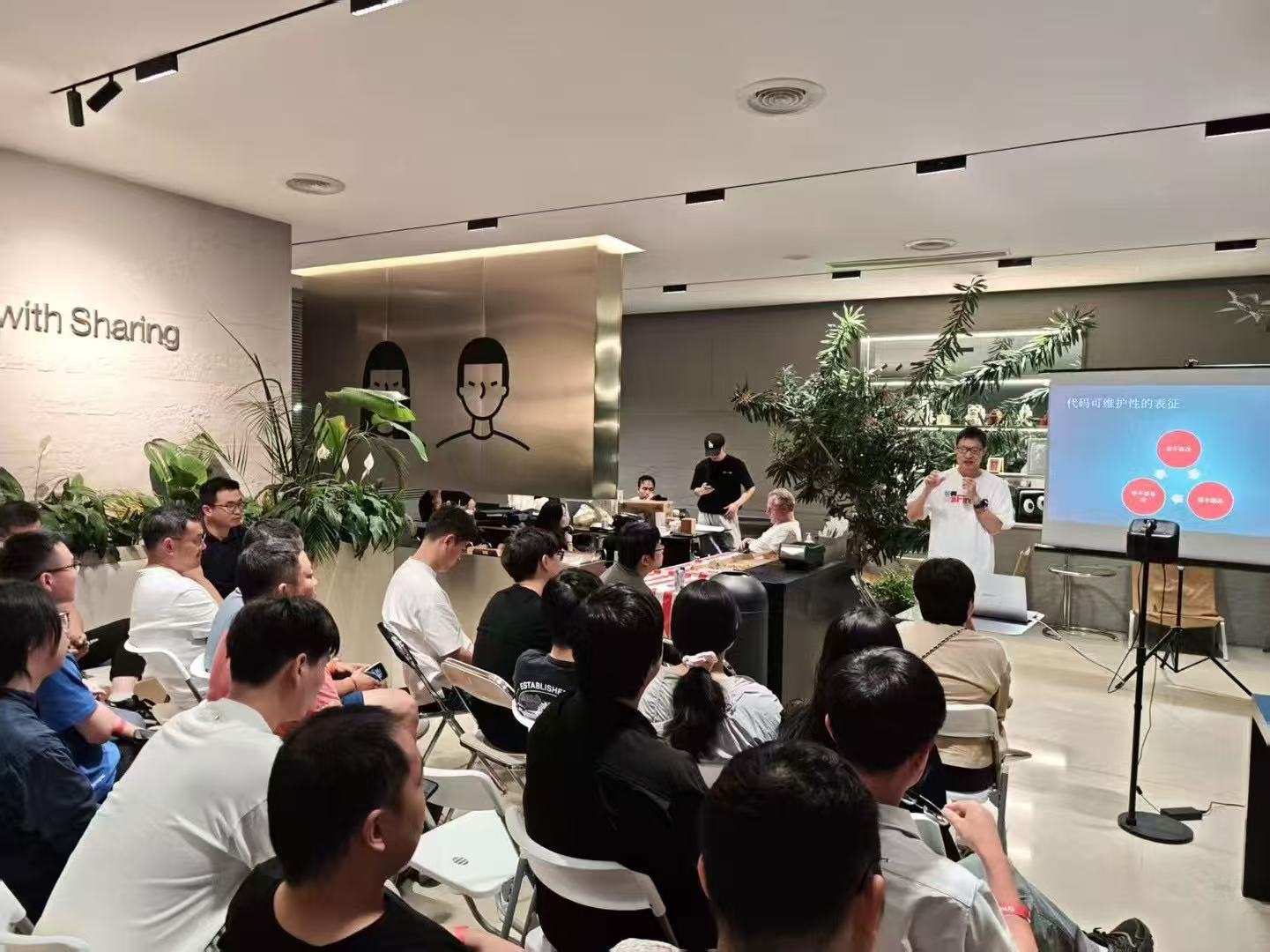
19:45 – 20:15 · How CleanDDD Makes Systems Maintainable
Speaker: Weiyu Xiao (肖伟宇) — Microsoft MVP · FireUG Co-Organizer · CleanDDD Co-Founder
Weiyu Xiao brought the perspective of someone who has introduced CleanDDD into real production systems and lived with the consequences. The session was structured around three questions:
- What did it cost? Introducing any architectural discipline carries onboarding friction, learning curves, and the cognitive load of enforcing new invariants. Xiao did not sugar-coat the trade-offs.
- What did it gain? Beyond the canonical “separation of concerns” benefits, the talk quantified how maintainability improvements compound over time — fewer regressions, faster onboarding of new team members, and more predictable delivery timelines.
- Why? This was the heart of the session. Rather than advocating CleanDDD as doctrine, Xiao traced the first-principles explanation for why complexity accumulates and why a domain-centric boundary strategy interrupts that accumulation. The argument was that most maintainability failures are not accidental — they follow predictable patterns that a principled architecture can prevent by design.
For developers wrestling with legacy codebases or planning a greenfield service, this talk offered a mental model, not just a methodology.
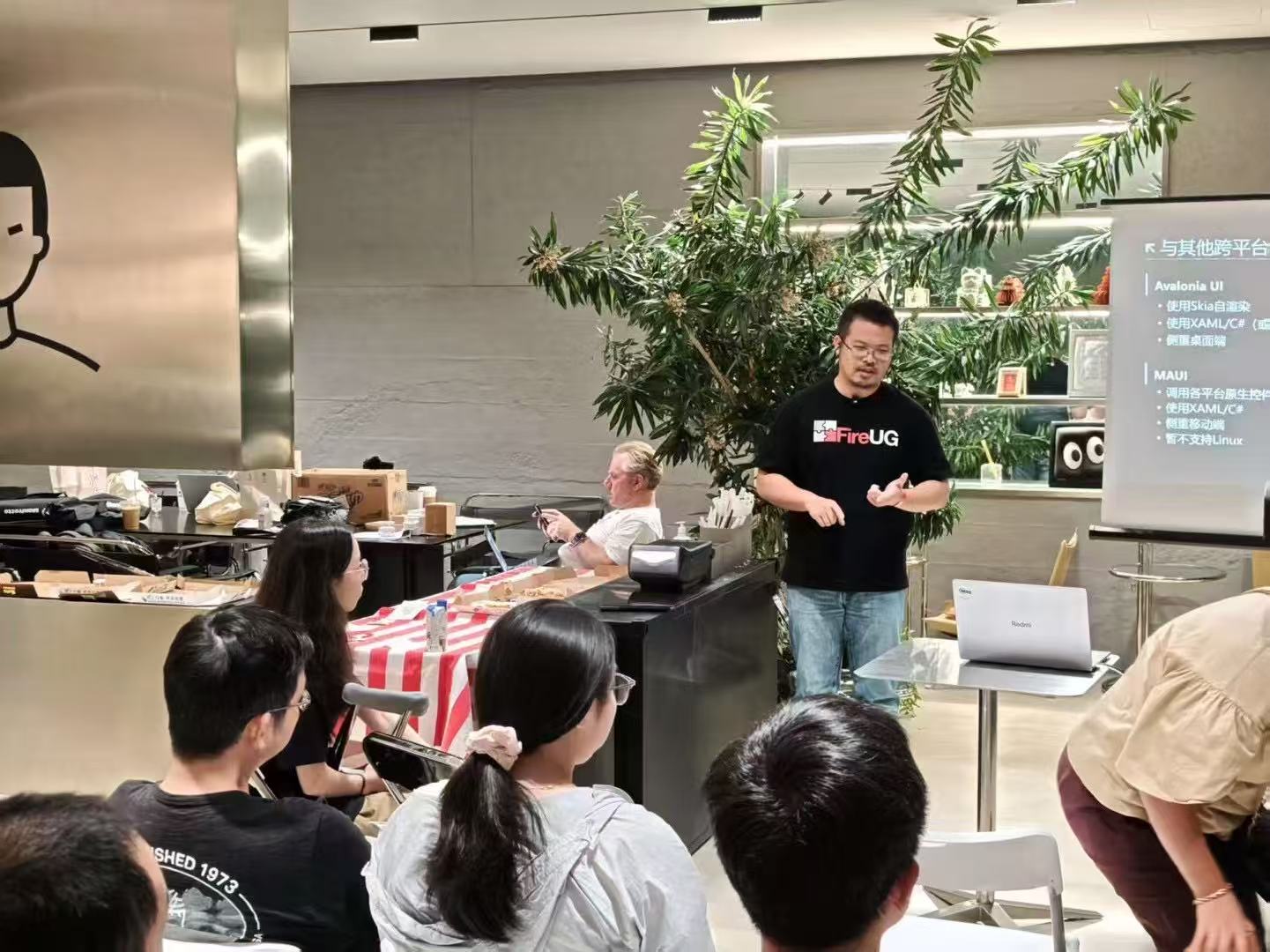
20:15 – 20:45 · Building High-Performance Cross-Platform Apps with Avalonia UI
Speaker: Bin Dong (董彬) — Microsoft MVP · Avalonia Chinese Community Organizer · Author of the Ursa Open-Source Component Library · Lear Software Engineer, Nomura Information
Bin Dong is in a unique position: he leads the Chinese Avalonia community and he has shipped production components through the Ursa library. That combination meant the audience got both the big-picture ecosystem view and the fine-grained implementation detail simultaneously.
Topics covered:
- What Avalonia UI is and why it exists — the gap it fills between WinForms/WPF (Windows-only) and MAUI (mobile-first)
- Cross-platform rendering architecture — how Avalonia achieves pixel-consistent output across Windows, macOS, Linux, iOS, Android, and WebAssembly using its own rendering pipeline
- Migrating from WPF — practical differences in data binding, styling, and control templating that developers encounter when porting a WPF application
- The Semi / Ursa design philosophy — how an open component library embodies Avalonia’s extensibility model and what that means for enterprise UI development in .NET
For .NET developers evaluating cross-platform options in 2025, this session was a calibration checkpoint backed by someone who has done the work.
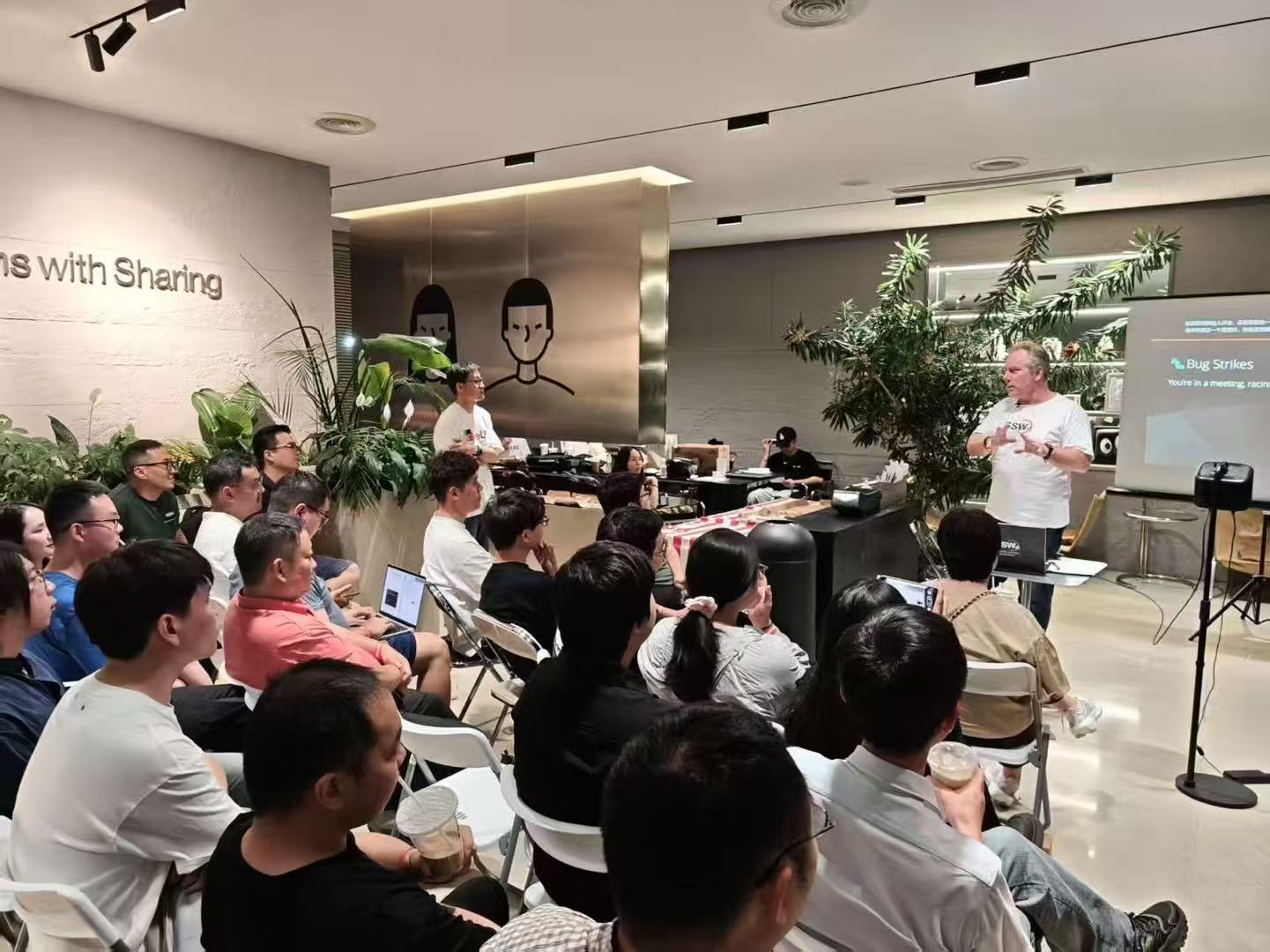
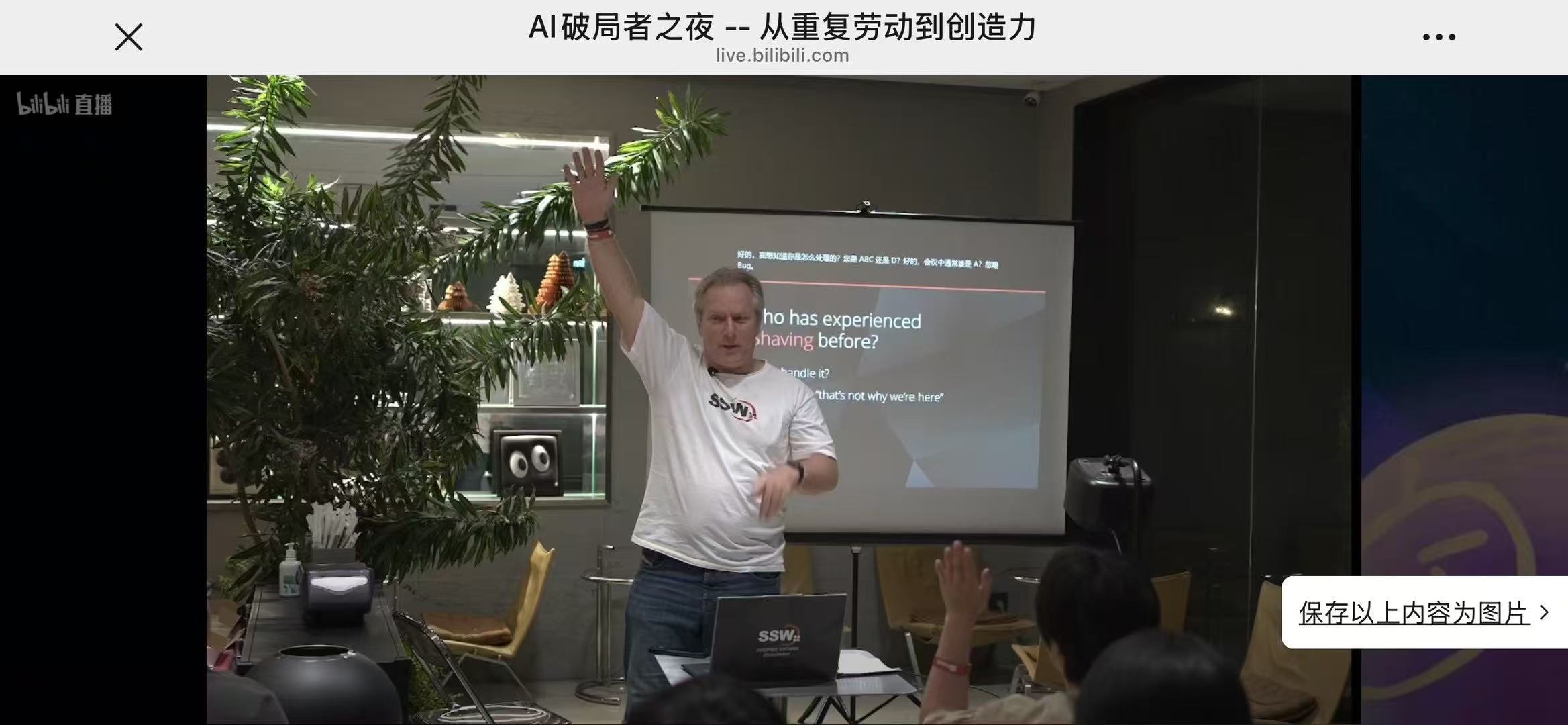
20:45 – 21:15 · Building an Enterprise AI Application — Shaving the Yak with AI
Speaker: Adam Cogan — Microsoft Regional Director · Chief Architect, SSW
Adam Cogan closed the technical program with a talk that was less about a specific framework and more about a recurring organizational failure mode: the requirements gap.
The premise: product owners and engineering teams operate under structurally different incentives. POs want velocity; developers want precision. When requirements are vague, developers fill the ambiguity with assumptions; when requirements are exhaustive, they become so unwieldy that no one reads them carefully anyway. Both failure modes are expensive, and both are remarkably common.
The thesis: AI, applied correctly at the requirements stage — not just at the code generation stage — can close that gap. The talk walked through concrete patterns for using AI to:
- Surface ambiguities in a specification before a sprint starts
- Produce structured, testable acceptance criteria from informal PO descriptions
- Accelerate the feedback loop between what was specified and what was delivered
The “Shaving the Yak” metaphor was apt: the actual problem developers spend time on is often three levels of indirection away from the stated goal. AI that understands project context can short- circuit several of those detours.
21:15 – 21:30 · Open Networking
The formal program closed and the room shifted into open conversation. Prizes — including Microsoft custom Bit Bear merchandise and Xiaomi Band 9 units — were distributed through audience interaction segments, and the remainder of the evening was a chance to continue the threads started on stage.
A Word on the Community
FireUG has been running events of this quality for years, and the formula remains consistent: invite practitioners who are accountable to real production systems, keep the format intimate enough that genuine conversation is possible, and remove all financial barriers to attendance.
Sponsored by Microsoft Reactor and a cohort of Microsoft MVPs, the evening included a Mint Coffee for every attendee and a full dessert and snack spread from HoHo Bakery — a level of hospitality that reflects how seriously the organizers treat the community’s time.
The next time a FireUG evening appears on the calendar, it’s worth clearing the schedule.
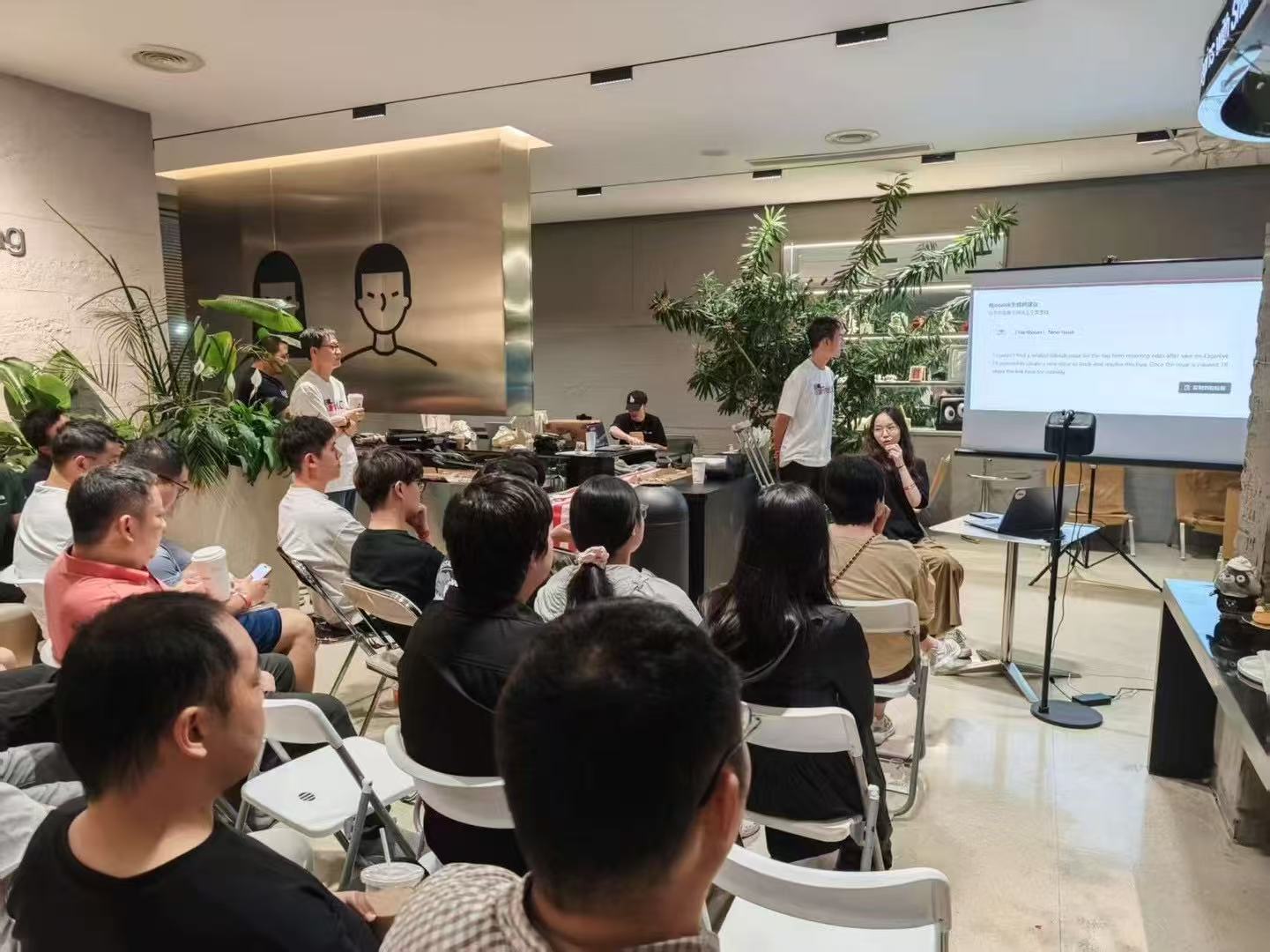
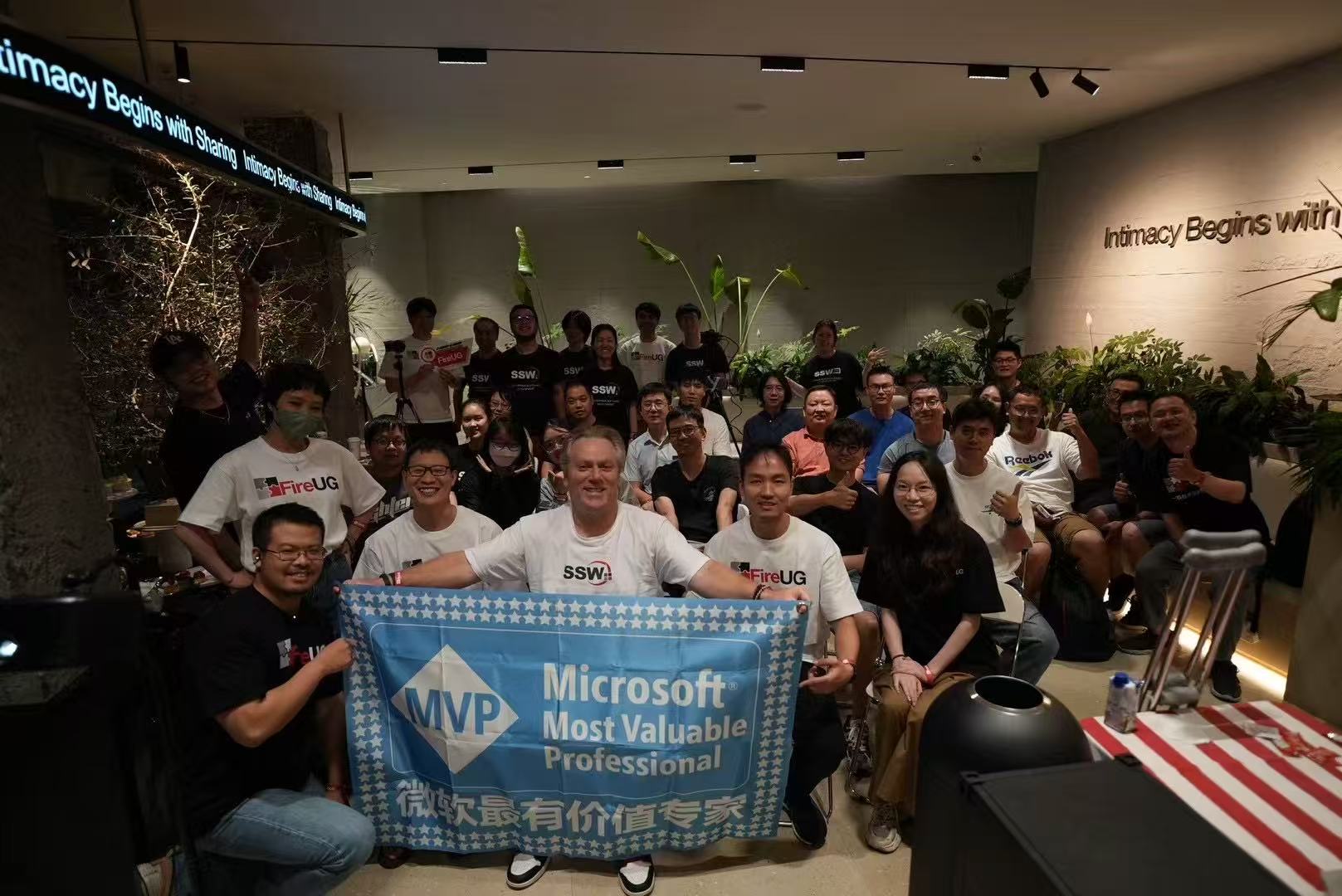
Photos
- 本文作者:BeanHsiang
- 本文链接:https://beanhsiang.github.io/post/2025-06-06-fireug-ai-breakthrough-night-hangzhou/
- 版权声明:本作品采用知识共享署名-非商业性使用-禁止演绎 4.0 国际许可协议. 进行许可,非商业转载请注明出处(作者,原文链接),商业转载请联系作者获得授权。